Seasonal / Published 2026-11-02
Short fall nail designs
Short fall nail designs that feel polished, wearable, and easy to personalize.
 Original Nail Art Inspo image
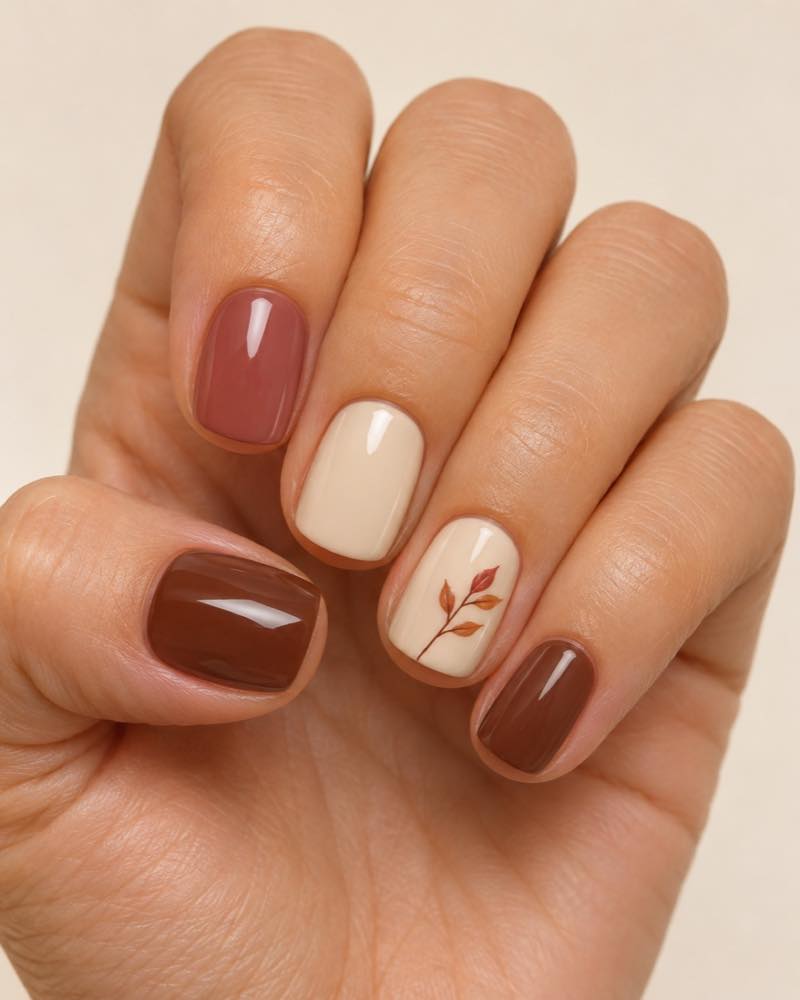
Short fall nail designs work best when the season comes through in the palette and small details, not only in the length or decoration. Cocoa brown, muted berry, cream, olive, plum, and warm nude shades can make a short manicure feel unmistakably autumnal while staying practical for typing, cooking, commuting, and everyday wear.
The easiest direction to request is a short square, soft oval, or squoval shape with a sheer or warm nude base. Add one seasonal color, a controlled accent, and a glossy or satin finish. That formula gives you a manicure that feels considered without making every nail compete for attention.
THE 20 DESIGNS
20 short fall nail design ideas
Start with the visual you came for. Each idea below has its own reference image and a practical explanation to take to your next appointment.
 Original Nail Art Inspo image
01
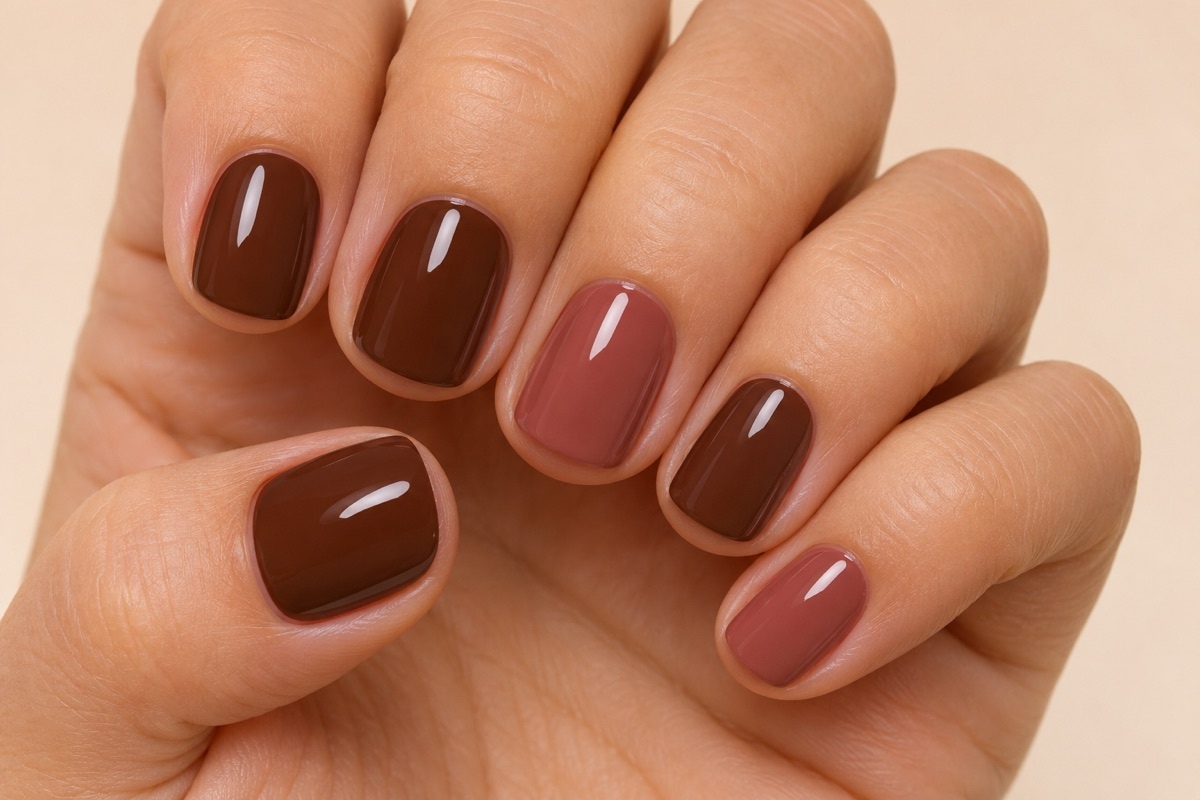
Cocoa gloss with one rosewood accent
Paint most nails in a medium cocoa brown and use rosewood on one or two accent nails. Keep the finish glossy so the color looks rich rather than chalky. This is the simplest version of the seasonal palette and works on short round, oval, or squoval nails.
 Original Nail Art Inspo image
02
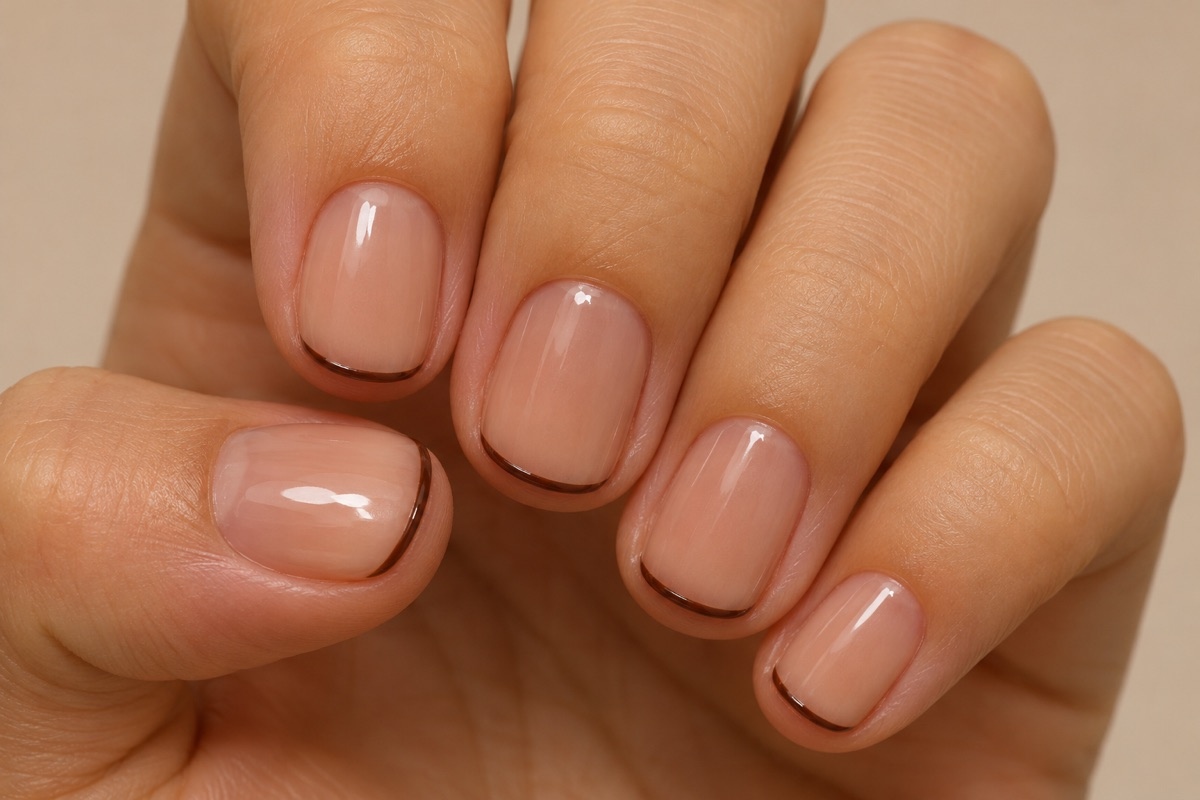
Sheer nude with espresso micro-French tips
Start with a translucent nude base and add a very thin espresso tip. Ask for a shallow smile line so the design does not take over the nail. This is a practical option when you want a fall update that still looks close to a classic French manicure.
 Original Nail Art Inspo image
03
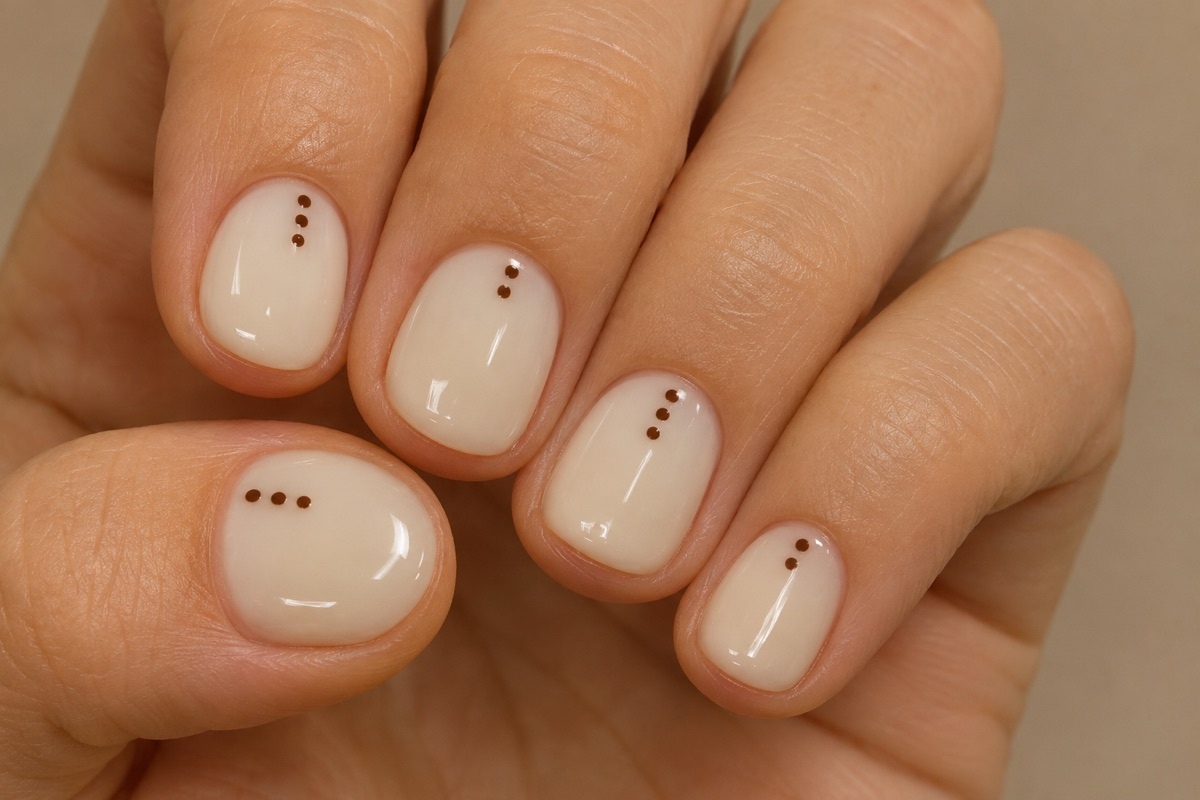
Cream nails with tiny brown dots
Use a milky cream base and add two or three small brown dots near the cuticle or sidewall. Keep the dots uneven enough to feel hand-placed but not so large that they become polka dots. This works particularly well on short rounded nails.
 Original Nail Art Inspo image
04
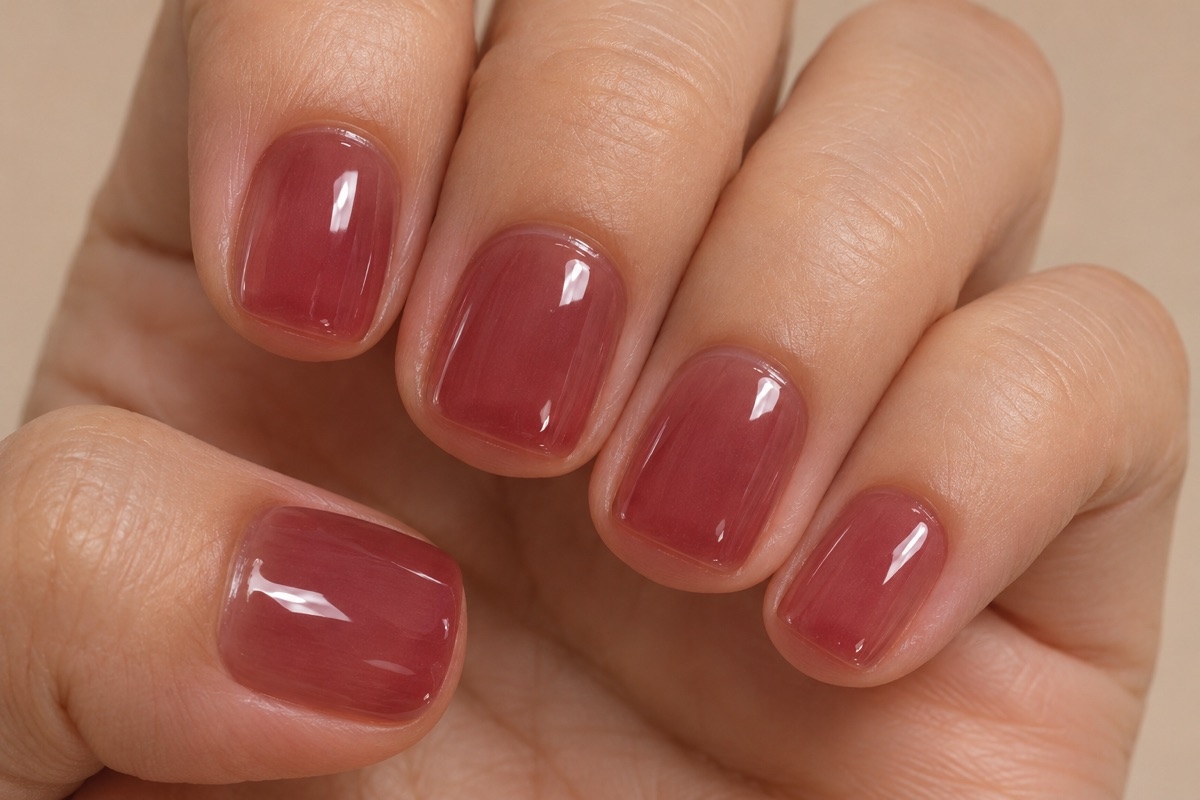
Rosewood jelly nails
A translucent rosewood or berry jelly finish gives short nails depth without heavy decoration. If the color is too strong, ask for a sheer layer over a milky base. The grow-out is softer when the base remains slightly transparent.
 Original Nail Art Inspo image
05
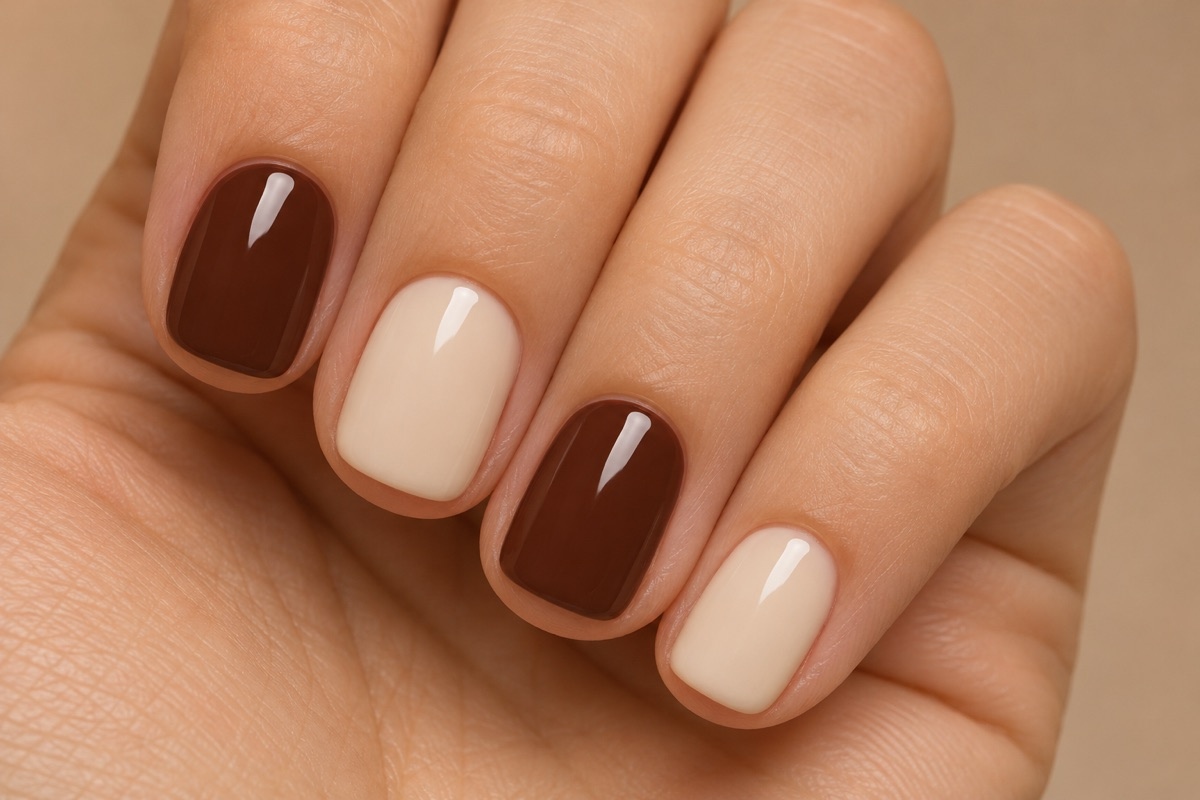
Alternating brown and cream nails
Choose one dark brown and one cream shade, then alternate them across the hand. This is an easy salon request because it does not depend on detailed nail art. Use the same glossy finish on both colors to keep the set cohesive.
 Original Nail Art Inspo image
06
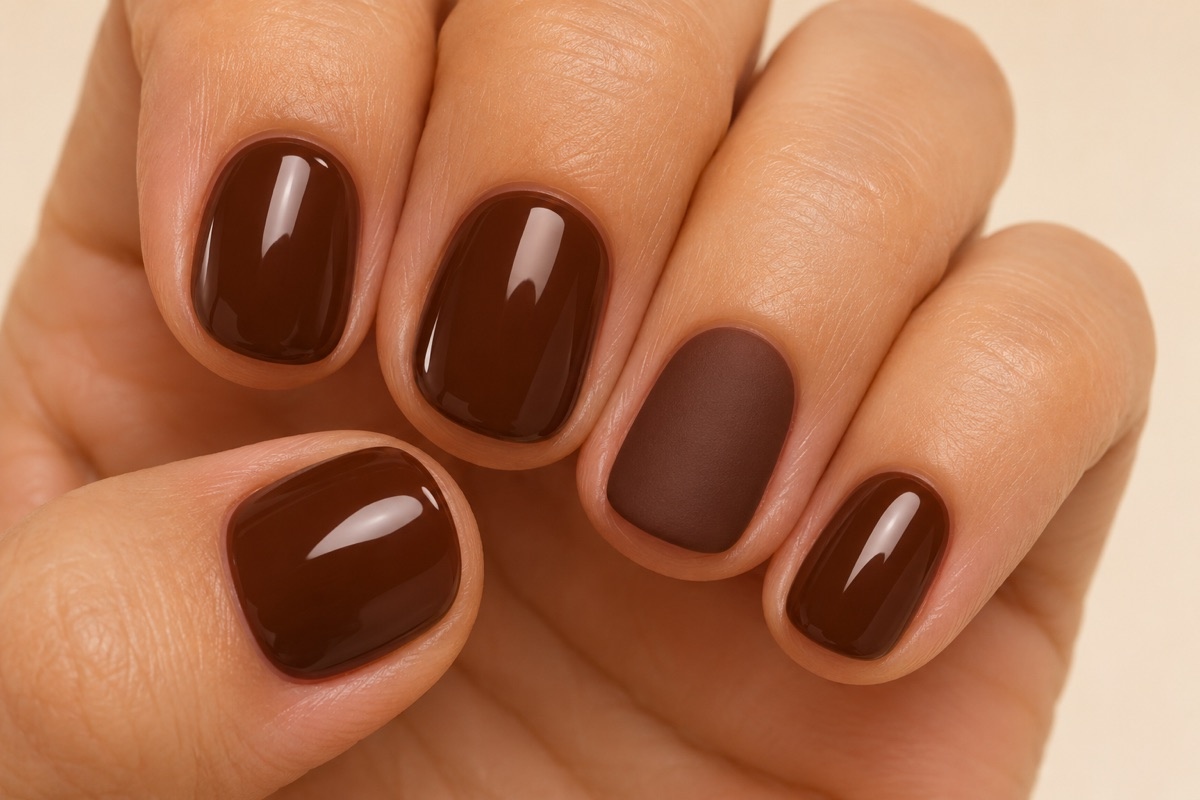
Short fall nails with a satin accent
Use a glossy brown base on most nails and a satin or matte finish on one accent nail. The contrast comes from texture rather than additional decoration. Confirm that the chosen finish is compatible with the product system your nail artist uses.
 Original Nail Art Inspo image
07
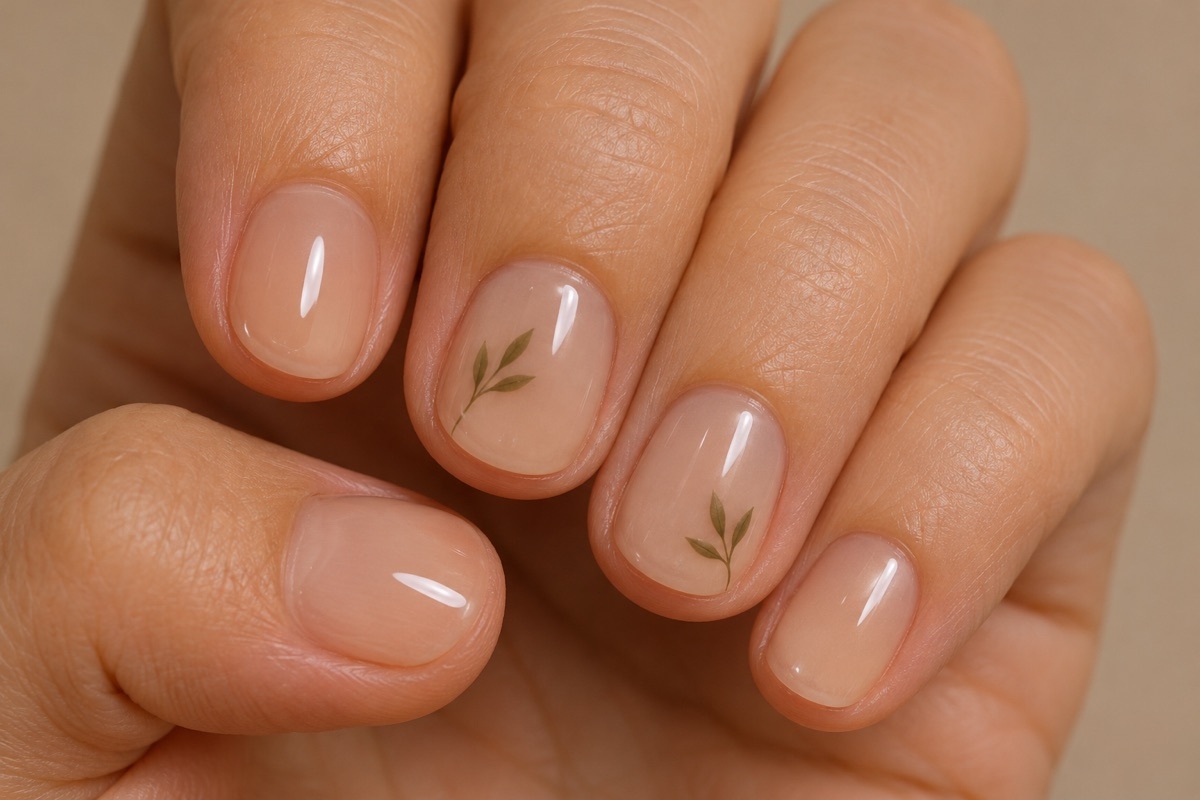
Minimal leaf detail
Begin with a sheer beige or cream base and add a single small leaf on two nails. Use a muted olive, brown, or rust tone instead of a bright green. The leaf should remain small and placed away from the free edge so the short shape stays visually clean.
 Original Nail Art Inspo image
08
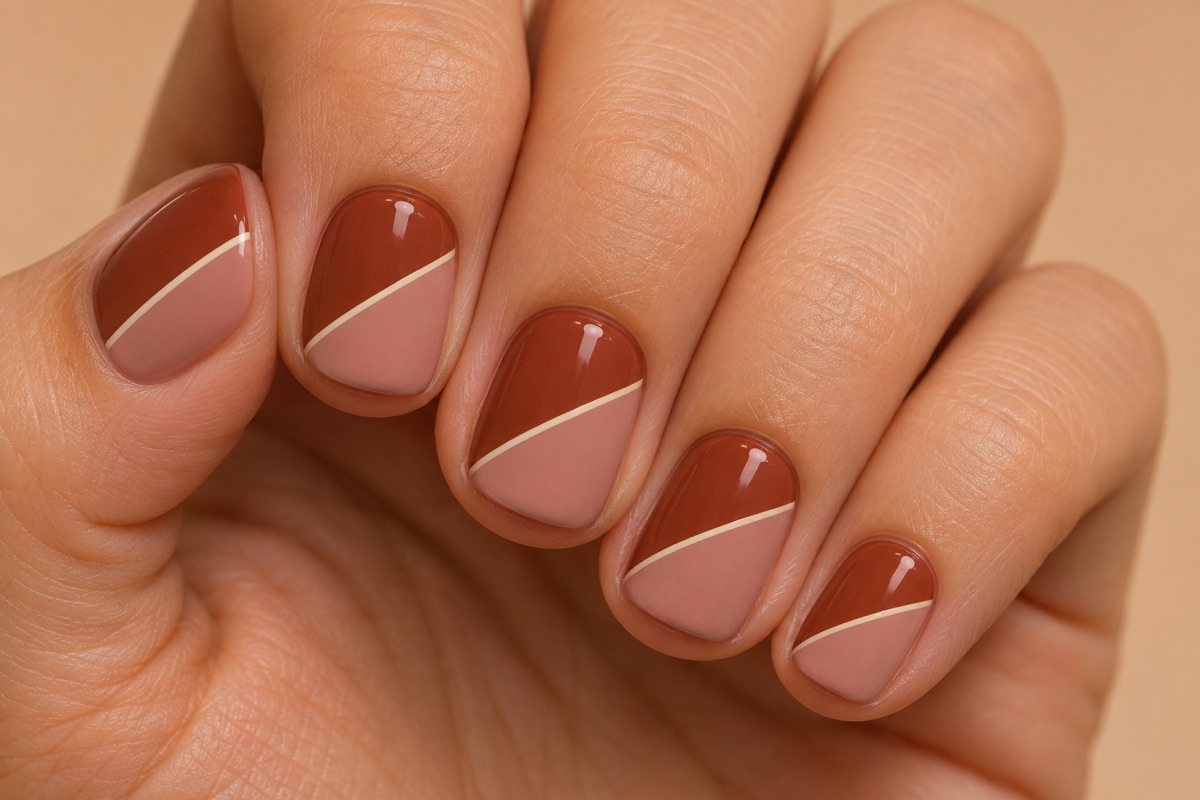
Rust and blush color-blocking
Pair a muted rust with a dusty blush. Use a diagonal block or half-nail treatment rather than filling every nail with multiple shapes. A narrow cream line between the colors can make the design easier to read.
 Original Nail Art Inspo image
09
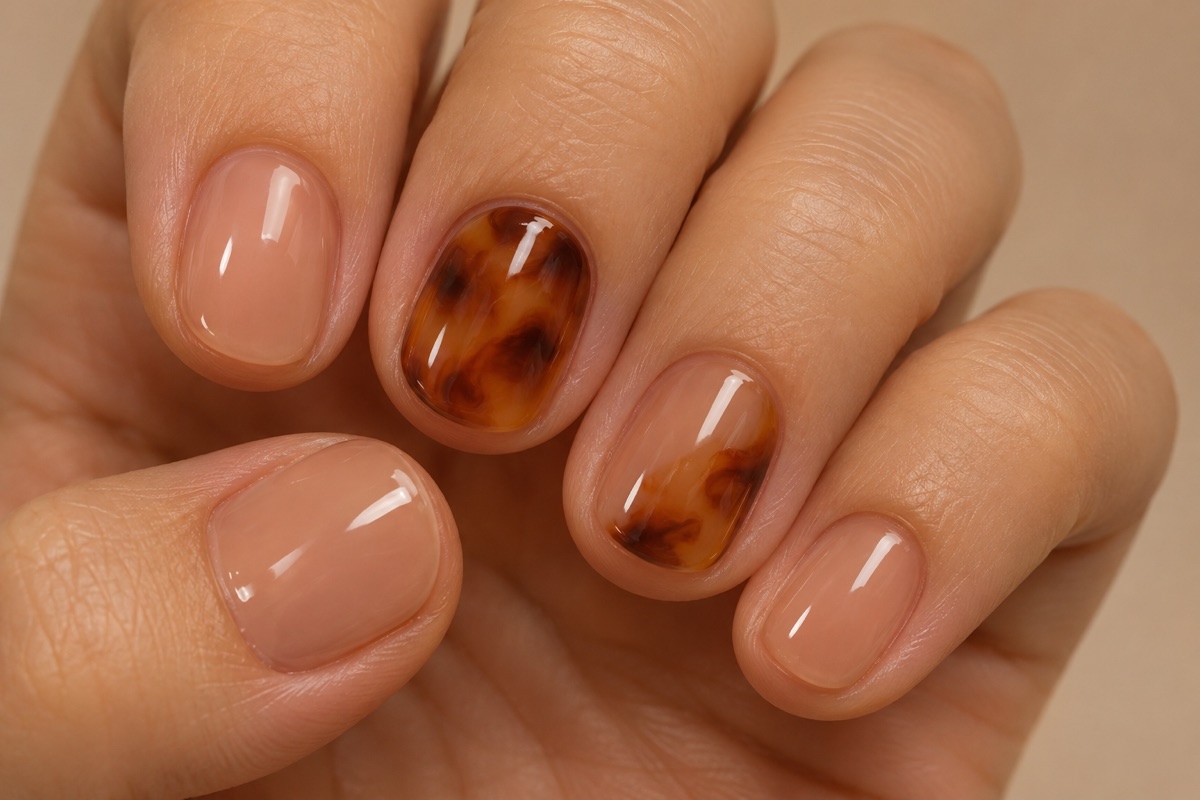
Brown tortoiseshell-inspired accents
Use a warm nude or caramel base and place a tortoiseshell-style accent on one or two nails only. Because the pattern has visual movement, limiting the number of accent nails keeps short nails from looking busy.
 Original Nail Art Inspo image
10
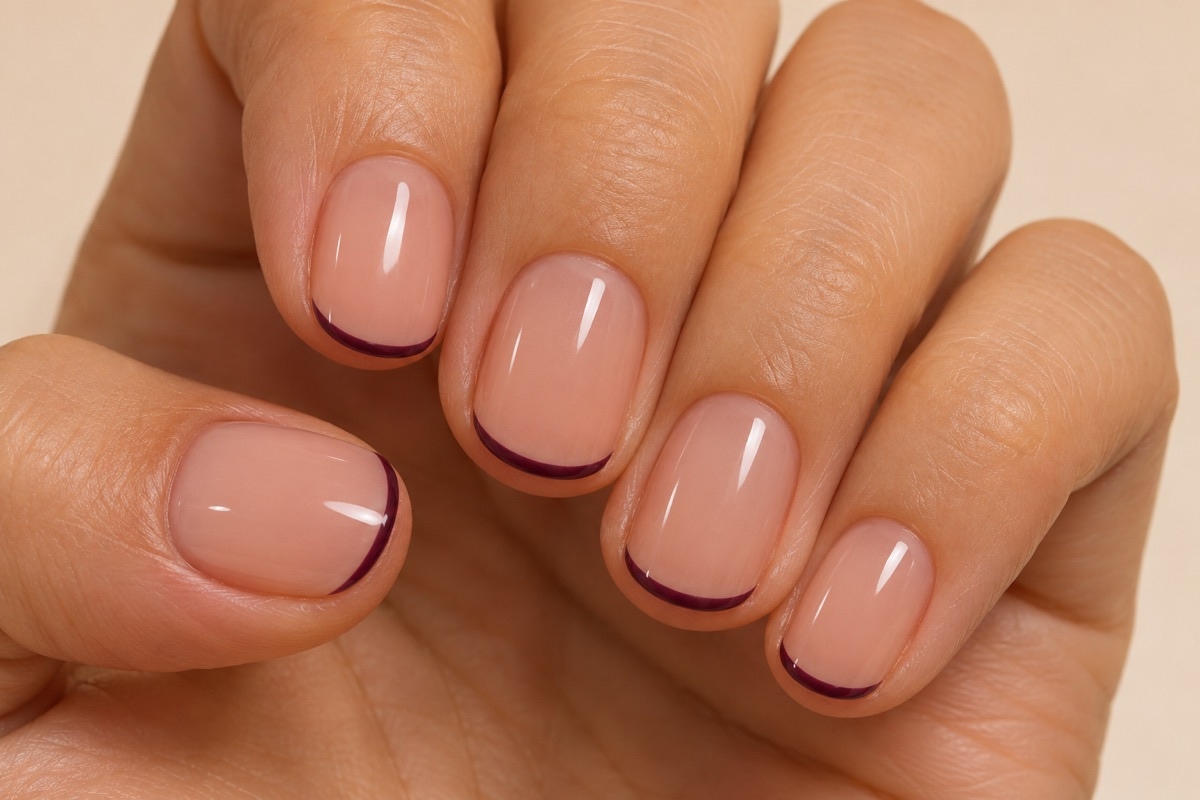
Plum tips on a warm nude base
Plum creates a fall mood without the heaviness of black. Use it as a thin French tip over a warm nude base. A soft oval or squoval shape gives the tip enough room to curve without needing extra length.
 Original Nail Art Inspo image
11
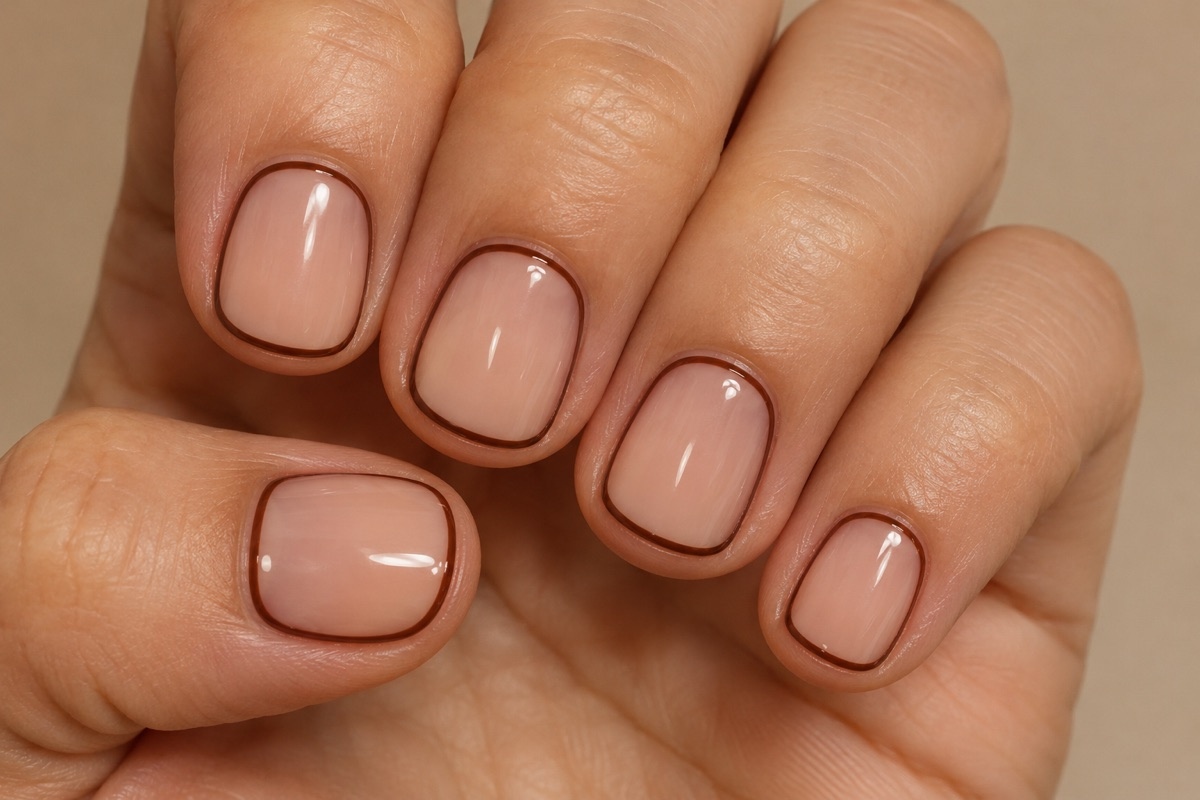
Chocolate outline manicure
Ask for a thin chocolate outline around a sheer nude nail. The outline can be complete or limited to the tip and sidewalls. This is a graphic look, so the base should remain quiet and the line should be consistent.
 Original Nail Art Inspo image
12
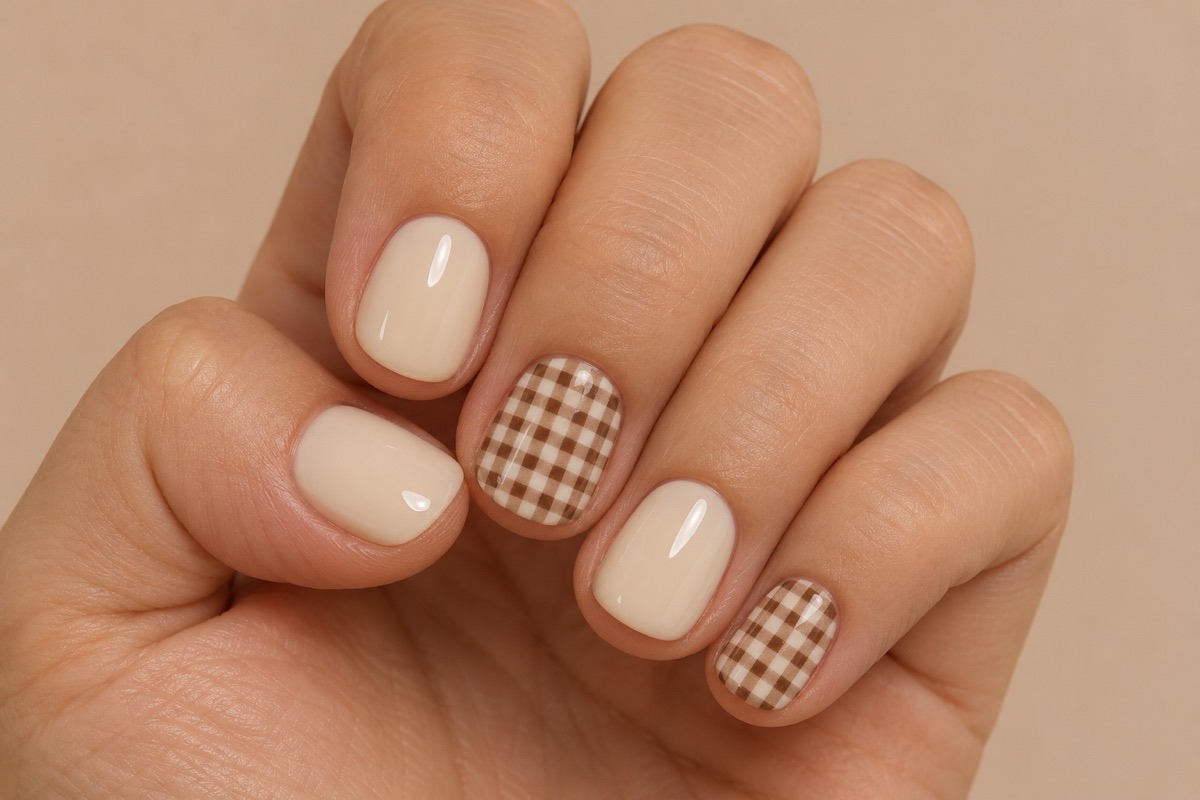
Coffee-and-cream micro-checks
Use a cream base with tiny coffee-colored checks on one or two nails. Keep the grid small and leave generous negative space. If the nail surface is very short, a single checked accent may look better than a full set.
 Original Nail Art Inspo image
13
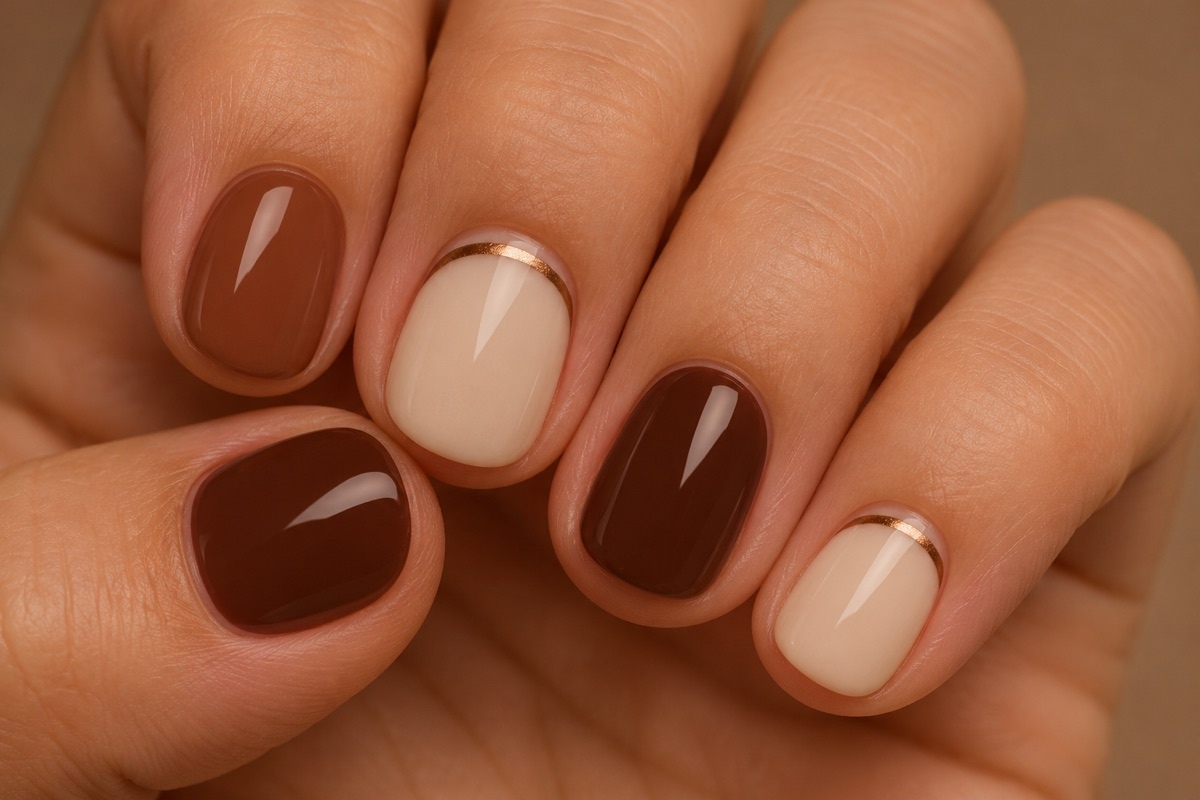
Metallic bronze line
A fine bronze or muted gold line can warm up a brown or cream manicure. Use metallic polish as a detail rather than a second full-color layer. One line near the tip or cuticle is enough to make the set feel special.
 Original Nail Art Inspo image
14
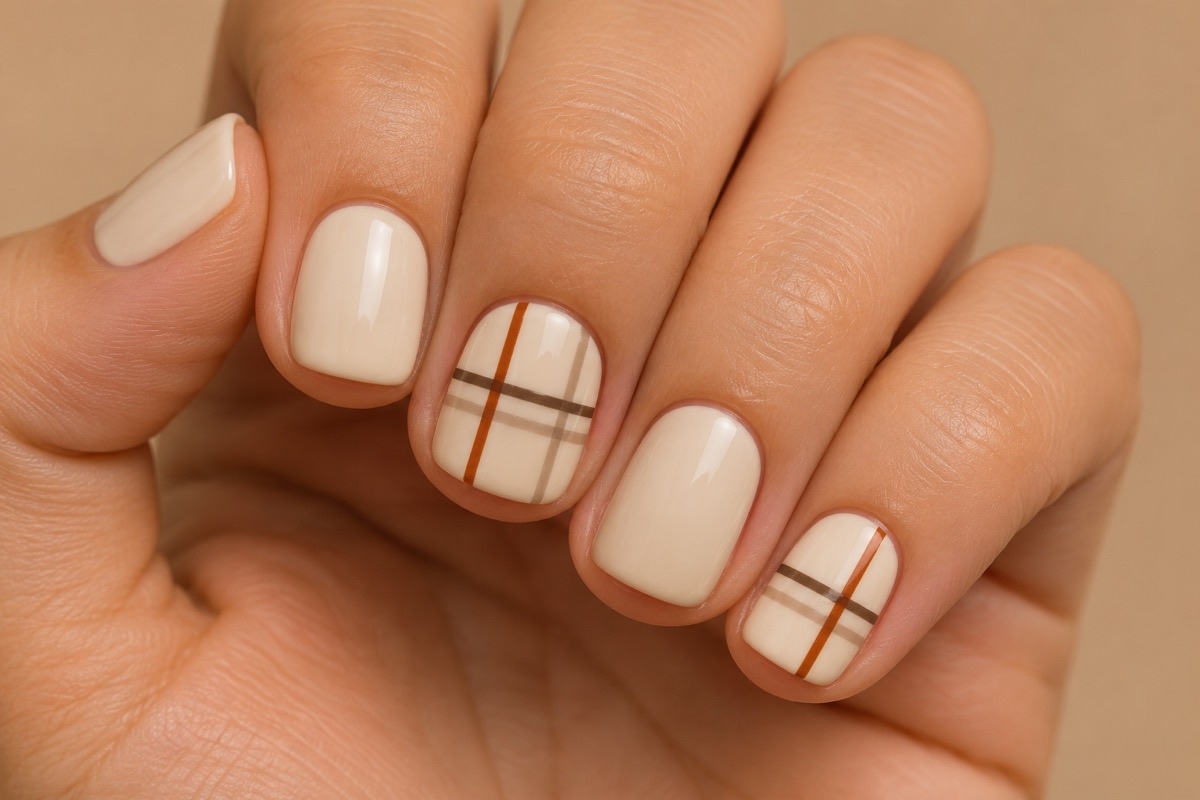
Soft plaid-inspired stripes
Choose two fall colors and one neutral, then use thin intersecting stripes on an accent nail. Avoid trying to reproduce a complicated textile pattern at a tiny scale. The goal is a suggestion of plaid, not a dense illustration.
 Original Nail Art Inspo image
15
Quiet holiday transition
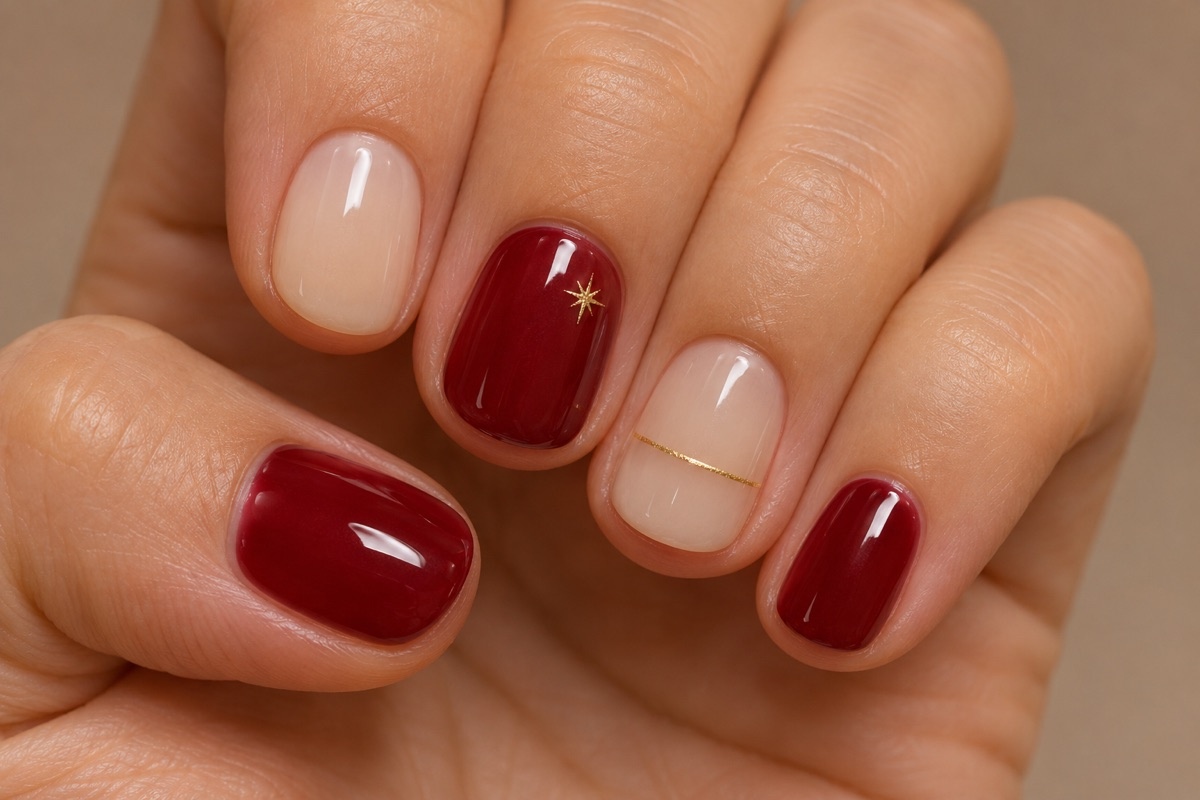
If you want a design that moves from autumn into the holiday season, combine cranberry, cream, and a small amount of gold. Keep the base sheer and use only one festive motif, such as a tiny star or line. This extends the life of the manicure without making it too themed.
 Original Nail Art Inspo image
16
Olive and mushroom micro-geometry
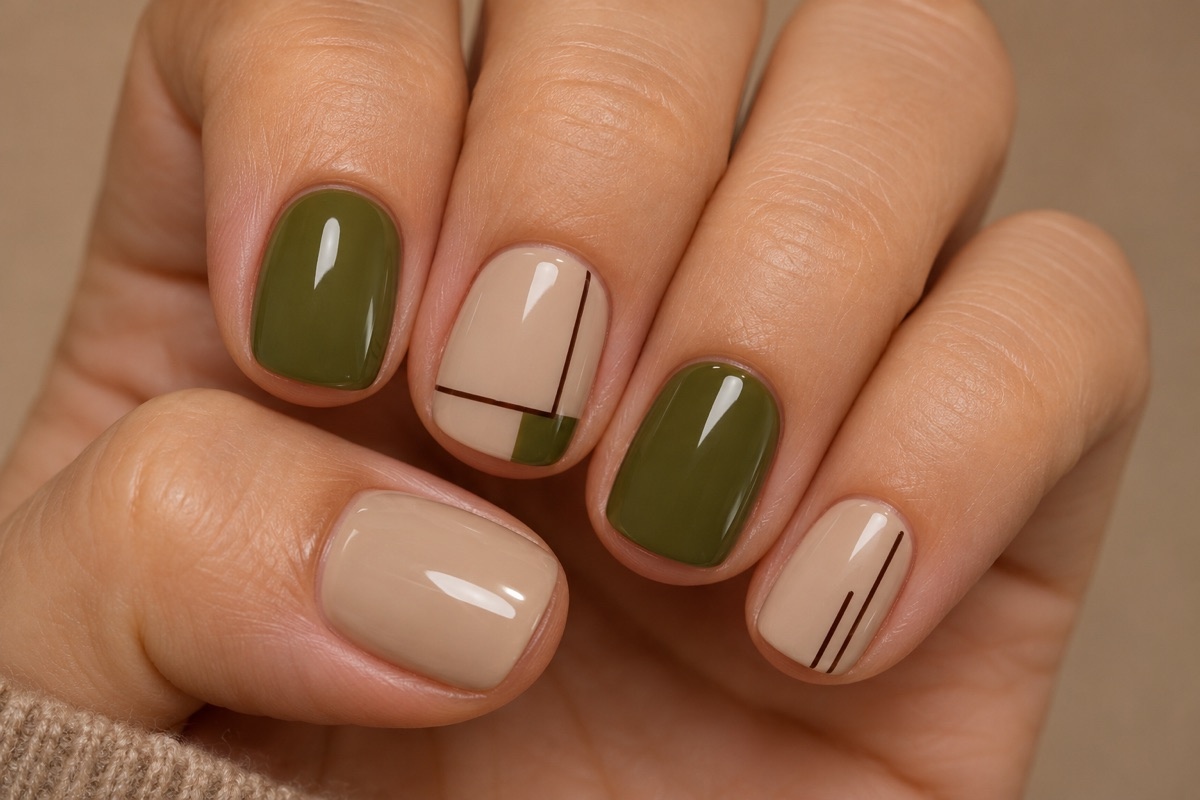
Pair olive and mushroom cream on a short squoval shape, then add one or two thin black-brown geometric lines. Keep the lines small and spaced out so the palette stays calm rather than looking busy.
 Original Nail Art Inspo image
17
Cranberry and pine alternating tips
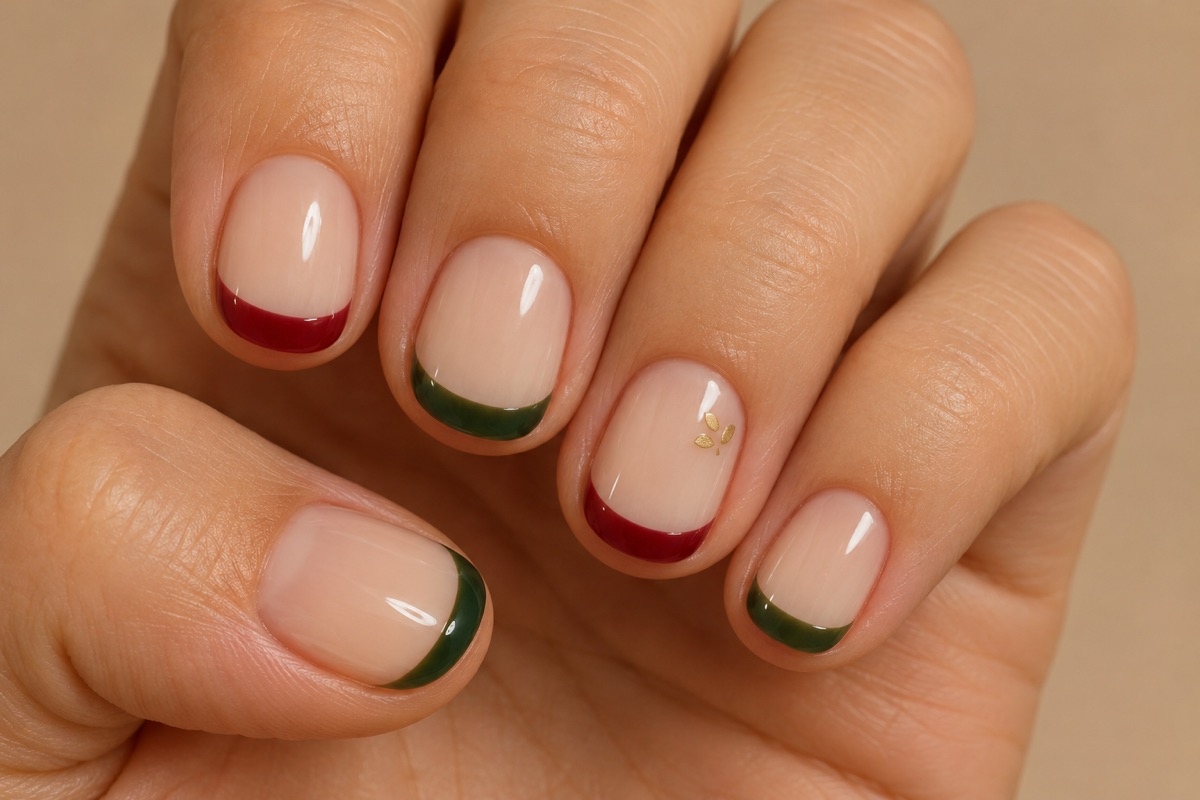
Use a sheer cream base with alternating cranberry and deep pine French tips. A shallow tip keeps the design balanced on short nails, while one tiny gold detail can make the set feel seasonal without turning it into a full holiday manicure.
 Original Nail Art Inspo image
18
Warm nude with rust micro-flowers
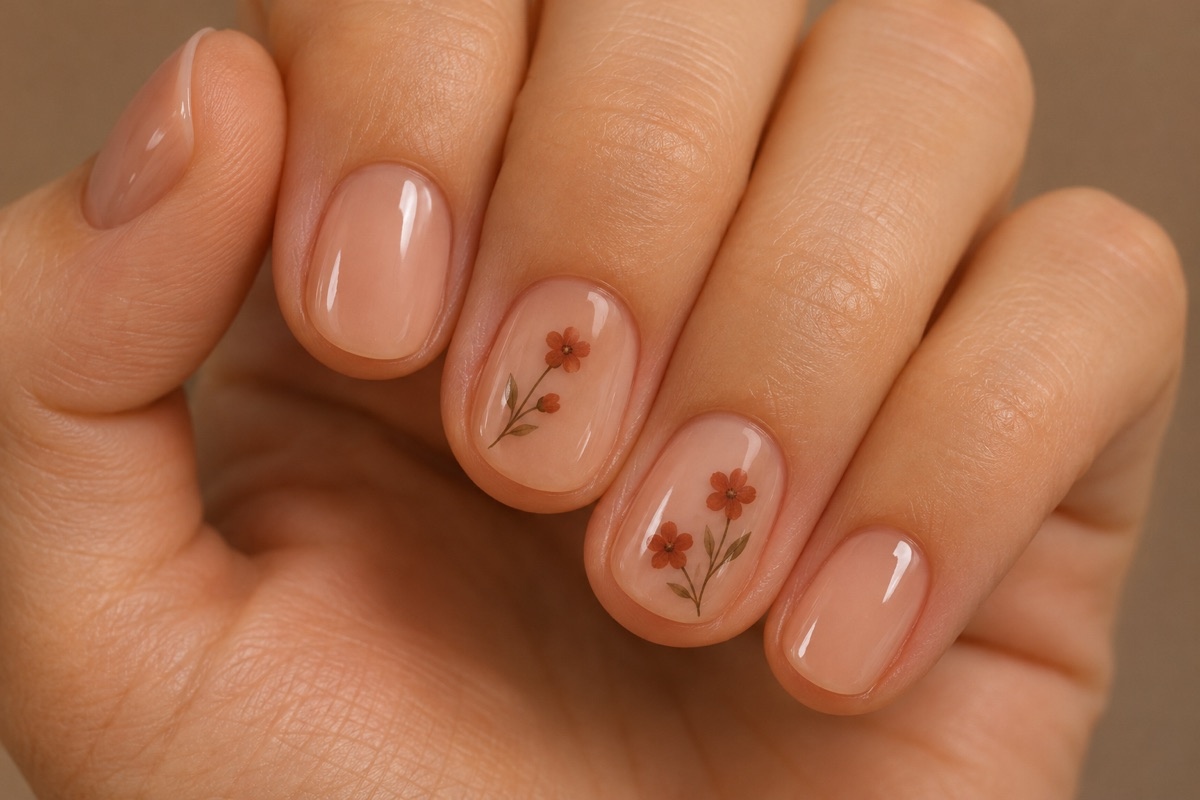
Start with a glossy warm nude base and place a tiny rust flower on two accent nails. Keep the petals small and use a single dot for the center so the design remains readable as the nails grow.
 Original Nail Art Inspo image
19
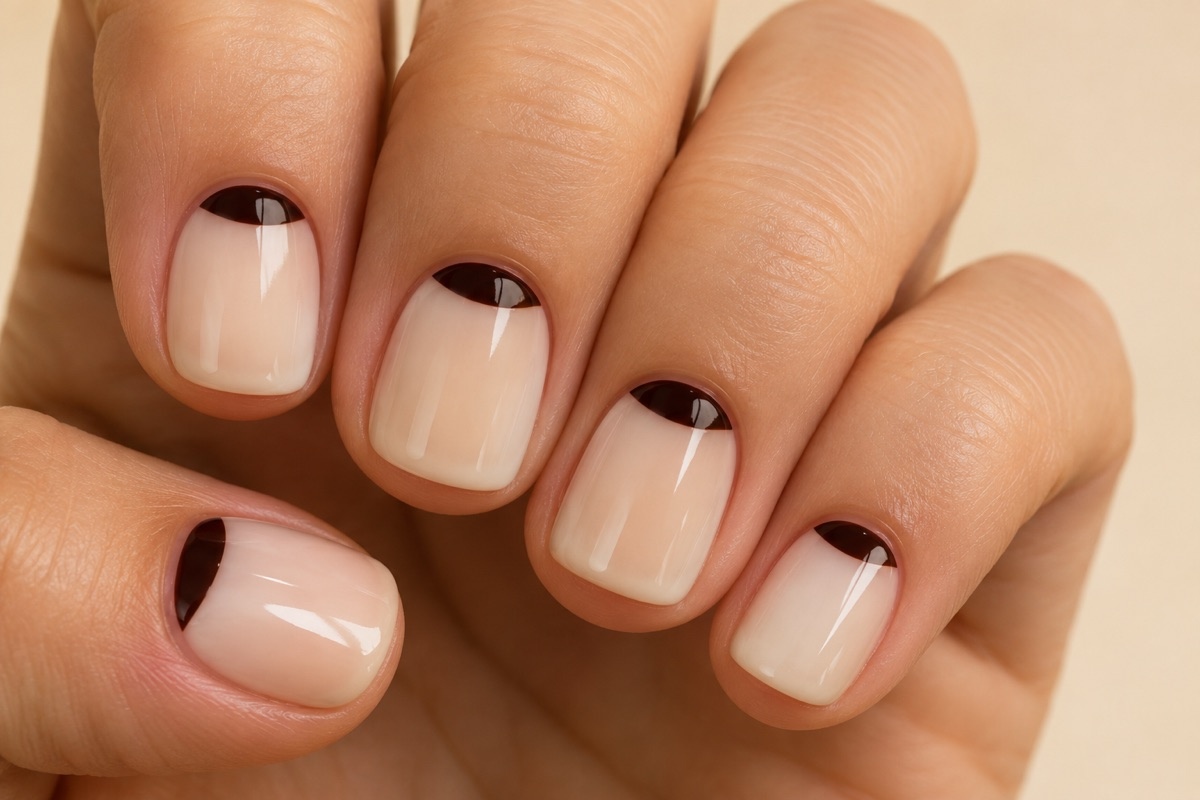
Black-brown negative-space half-moons
Use a sheer cream base and place a black-brown half-moon near the cuticle. This graphic detail gives short nails definition while leaving enough negative space for the manicure to feel light.
 Original Nail Art Inspo image
20
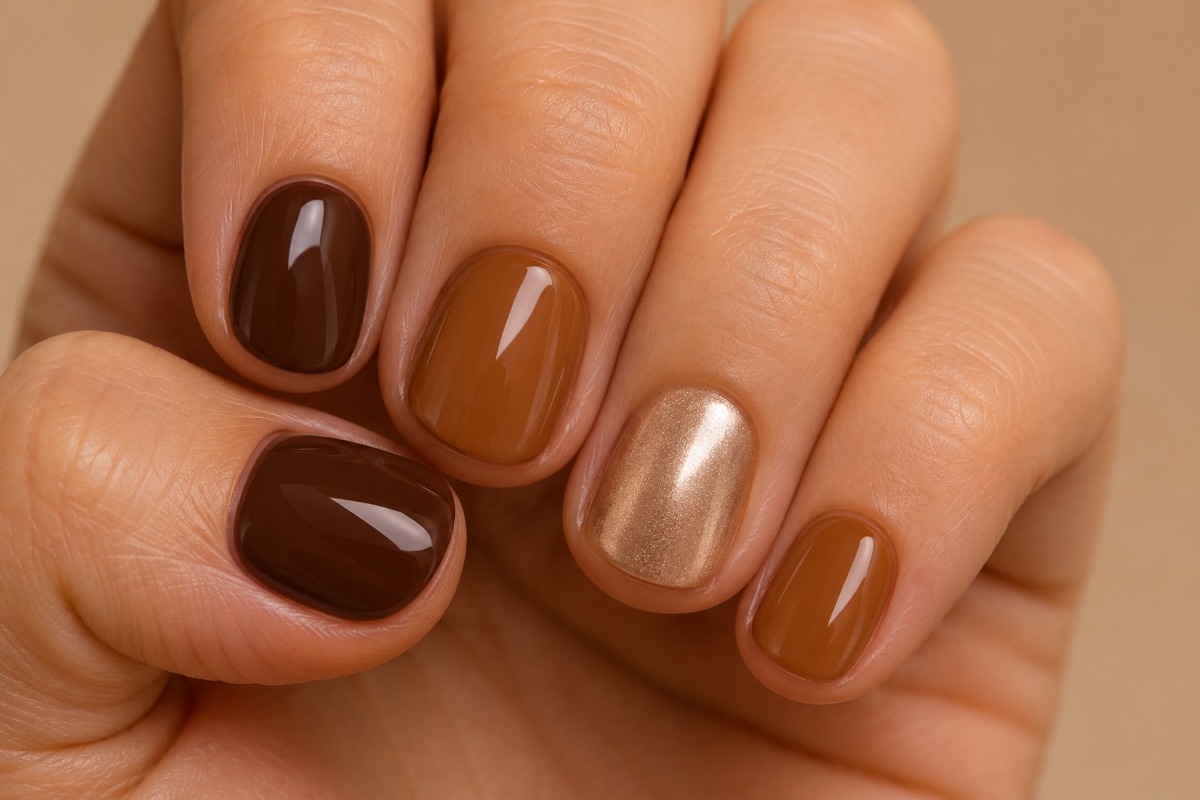
Espresso, caramel, and a champagne chrome accent
Anchor the set with espresso brown, soften it with one caramel nail, and reserve champagne chrome for a single accent. The mix feels polished and autumnal while staying simple enough to request at a salon.
What makes a short fall manicure feel seasonal?
A fall manicure does not need pumpkins, leaves, or a full collection of dark colors. Seasonality can come from temperature and contrast: a coffee brown beside a pale cream, a muted rosewood beside a soft pink, or a deep plum used as a single accent. On short nails, restraint is useful because a small surface can make dense artwork look crowded quickly.
Think of the design as three decisions:
- A base: sheer pink, warm nude, milky cream, or translucent beige.
- An anchor color: cocoa, espresso, cranberry, rust, olive, or plum.
- One detail: a thin line, micro-flower, tiny leaf, subtle French tip, or single accent nail.
Keeping those decisions separate makes the reference easier to explain and easier for a nail artist to adapt to your natural nail shape.
Why short nails are a good canvas for fall colors
Short nails do not need to imitate a long almond or coffin set. They have their own advantage: color reads clearly, the manicure feels wearable, and small shape changes are easier to maintain. A short rounded edge can soften a dark shade, while a short squoval can make a graphic French tip look crisp without becoming severe.
Short nails also make it easier to repeat a seasonal idea in a low-commitment way. You can test a dark brown, berry, or green palette without feeling that the color dominates your whole look. If you usually wear neutrals, use a sheer base and put the seasonal shade on two nails. If you already enjoy color, use the darker tone as the base and reserve cream or metallic details for contrast.
The best fall color palettes for short nails
Cocoa, rosewood, pearl, and ink
This is the core palette for a polished autumn set. Use cocoa or rosewood on most nails, pearl as a soft base or accent, and ink only for a tiny line or dot. The result feels warm without becoming too orange or too dark.
Espresso, caramel, cream, and plum
Use espresso as the anchor and caramel as the lighter companion. A cream accent prevents the palette from looking flat, while plum adds depth. This combination is especially easy to adapt to a short square or oval shape.
Cranberry, pine, snow, and gold
For a holiday direction, cranberry and pine can appear as alternating French tips rather than full-color blocks. Add a small gold detail on one or two nails. The palette reads festive but remains restrained.
Warm nude, terracotta, blush, and chocolate
This is a softer choice for people who want fall color without a dramatic manicure. Use warm nude as the base, terracotta on the tips, blush for a small accent, and chocolate for a line or miniature motif.
Olive, mushroom, cream, and black-brown
Olive becomes easier to wear when it is paired with mushroom or cream. A black-brown line can define the design without the sharpness of true black. This palette works well with a minimal geometric detail.
More visual references
Choosing the right shape and length
A short squoval is a reliable choice when you want a little structure at the corners without a sharp square edge. It suits French tips, outlines, checks, and color blocking.
A short oval softens dark colors and is useful when you prefer a more natural appearance. It works well with jelly finishes, tiny flowers, dots, and single-color manicures.
A short round shape is practical when your nails grow unevenly or you want the least visual maintenance. It pairs naturally with small dots, soft French tips, and sheer bases.
If your nails are very short, ask for a design that begins slightly away from the edge. A tiny gap can make the manicure look intentional and gives the design room to grow out. Do not choose a reference only because the image shows a longer nail; ask the artist to adapt the proportions to your actual length.
More visual references
How to describe the look at a salon
A useful salon request includes four details: length, shape, base, and accent. For example:
“I want a short squoval shape with a sheer warm-nude base, cocoa-brown color, and one or two rosewood accents. Please keep the detail minimal, with a thin line or tiny leaf rather than full coverage. I want a glossy finish and enough negative space for the set to feel easy to wear.”
Bring the reference image, but also explain what must stay and what can change. The shape and palette may be essential, while the exact placement of a flower or line can be adjusted to fit your nail beds. If you are unsure about the finish, ask to compare glossy and satin options on a sample nail or tip.
More visual references
A simple at-home version
For a lower-detail home manicure, begin by cleaning and shaping the nails. Apply a base coat if it suits the polish system you are using. Add one sheer neutral layer, then build the seasonal color with thin coats rather than one thick coat. Let each layer dry according to the product instructions.
Use a small detail brush or dotting tool for one line, dot, or tiny flower. It is better to place one deliberate accent on each hand than to keep adding decoration after the design already feels balanced. Finish with a compatible top coat and clean the edges only after the polish has settled enough to avoid dragging the design.
Do not treat a reference image as a promise that the same result will appear on every nail. Polish opacity, nail texture, lighting, and application technique all change the final look. The goal is to borrow the direction and adapt it to your real nails.
More visual references
How to help the manicure last
Keep the cuticle area moisturized and avoid using the nails as tools. Gloves can help protect the manicure and the nails when you are washing dishes or working with cleaning products. Repeated water exposure and harsh chemicals can contribute to splitting, peeling, or early wear.
If a gel or artificial system is involved, follow the removal instructions from the salon or product manufacturer. Do not peel or force product from the nail. If the nail plate, surrounding skin, or cuticle area becomes painful, swollen, irritated, or persistently discolored, pause cosmetic coverage and seek qualified professional advice.
A short manicure is not maintenance-free, but it can be forgiving. Small chips are less noticeable when the palette is soft, the shape is consistent, and the design does not depend on one perfectly placed large motif.
More visual references
Common mistakes to avoid
- Choosing five dark shades without a lighter visual break.
- Using a detailed reference that was designed for long nails without adapting it.
- Asking for “fall nails” without specifying the shape, length, or finish.
- Filling every nail with leaves, pumpkins, plaid, or metallic decoration.
- Removing or aggressively pushing cuticles in an attempt to make the manicure look cleaner.
- Peeling off gel or artificial product when the manicure begins to grow out.
- Assuming an online image proves the exact polish, product, or technique used.
Frequently asked questions
What are the best fall colors for short nails?
Cocoa, espresso, rosewood, cranberry, plum, rust, olive, warm nude, cream, and chocolate are flexible choices. Pair one darker anchor with a lighter neutral so the manicure has contrast without looking heavy.
Can short nails wear a French tip?
Yes. Ask for a shallow, thin tip rather than a deep or wide smile line. A sheer base and a soft oval, round, or squoval shape can make the design feel balanced on a shorter nail.
What is the easiest short fall nail design?
A sheer warm-nude base with cocoa or espresso micro-French tips is one of the easiest directions to request. Alternating one brown and one cream shade is another low-detail option.
How can I make dark polish look softer?
Use it on two or three nails instead of all ten, pair it with cream or warm nude, choose a glossy or satin finish, and keep the nail shape rounded or softly squared.
Should I cover damaged nails with artificial product?
Covering a nail problem can make it worse or hide a condition that needs attention. If you have ongoing pain, swelling, lifting, unusual color, or damage, ask a qualified healthcare professional before using cosmetic coverage.
Useful Sources And Verification
- American Academy of Dermatology: 11 dermatologists’ tips for healthy nails
- American Academy of Dermatology: Manicure and pedicure safety
- American Academy of Dermatology: Reducing artificial nail damage
- U.S. Food and Drug Administration: Nail care products
These sources support the nail-care and safety guidance. The color combinations and design directions above are editorial inspiration, not medical advice or a guarantee of a particular salon result.